
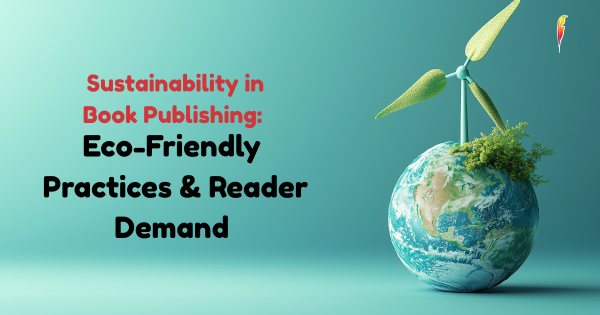
Sustainability is not a word in publishing nowadays. However, it has become a priority in every publishing industry. Most of the readers are worried about the environment, so readers started thinking about the materials used in printing, and how books are reaching the readers from factories. Publishers, Writers, and Readers are asking questions: Can paper be recycled? What about cleaner printing methods? Should we be reading more digital books? There’s a big shift happening. It’s not just about cutting down on harm; it's about creating a smarter, more responsible publishing world that people care about today.
Why eco-friendly practices matter in publishing
Greener practices are not just nice to have in publishing; they can be difficult to maintain. Making books in older ways takes massive deforestation all over the world. This can be concerning when it comes to climate change. In the current situation, readers want the books without destroying forests and damaging the planet, so they expect publishers to step up.
Here, the thing is, sustainability doesn't just help the environment but also makes business sense. Paper recycling and updating the paper printer tech that uses less energy, and cutting down the waste, make the cost less and more efficient in production.
When publishers start thinking greener, it is easy to build a connection and trust with the readers who have concerns about the environment. In publishing eco-friendly matters, the stories can be told without affecting the planet.
Why readers demand sustainability in book publishing
Readers expect sustainability from book publishers. Climate change, Deforestation, extreme weather events, and loss of biodiversity are not at all just headlines. People see collisions every day, everywhere, and they don’t want to spend money on these industries or companies that don't care about the environment. Books feel more personal to readers than almost anything else. That is the reason why most of the readers want their books responsibly, without harming the planet.
On the other side, readers want to know how these books are made, and whether the company follows any ethics on the environment. Publishers can reuse and recycle the paper, offer digital versions, be carbon neutral, etc. When a publisher honestly puts in efforts, it builds trust and keeps the readers in communication for a long time. For a lot of folks, choosing eco-friendly books isn’t just appeasing readers. It feels like a real way to help the planet.
Eco-friendly innovations in book publishing
Publishing houses are changing now, and eco-friendly books with ideas are the tip of it. For example, take paper, as many publishers now choose reused or recycled papers that are taken from deforestation. They shift this away and use petroleum inks or vegetable-based inks. They are taken without polluting nearby places.
Then there’s demand on the printer side, instead of printing hundreds of copies and hoping that books may sell, now publishers are printing the books only when the readers order them. This controls the waste and keeps the warehouses from filling with the unsold books, and even saves the trees from deforestation. E-books and audiobooks do their part, too, since they don’t need any paper or ink.
Packing is even more important, and now it is changing in the publishing industry. Most of the companies are packing up with biodegradable materials for shipping. New printing technologies use less energy, and some of the publishers are moving to carbon-neutral printing from start to end. All these changes are crucial and help publishers to build a sustainable future, for both the publishing industry and the environment.
Challenges with sustainability in book publishing
Sustainability sounds easy, but in book publishing, it can be complicated. For new writers, the eco-friendly materials cost more than the recycled papers or even the biodegradable packaging. Large companies can manage, but small publishing companies and uncommercial publishers cannot afford the price. They feel the pinch. It’s hard to eat those extra costs without bumping up the price of books, and nobody wants that.
Then there’s the whole supply chain mess. The books travel across the borders from warehouses through trucks, planes, etc. All that shipping adds to emissions. Getting to carbon-neutral delivery isn’t simple; it takes new tech and strong partnerships, and honestly, not every publisher has the resources for that. Plus, not every region even has sustainable printing options, so some publishers simply don’t have a green choice nearby.
On top of it all, readers want fast shipping, lots of formats, and pretty covers. That’s tough to deliver without cutting corners on sustainability. So, publishers are stuck trying to please readers without trashing the planet. The only real way forward? Everyone pitches in, publishers, writers, distributors, and readers, to back greener options and help make them affordable and realistic for the long run.
Best eco-friendly practices for publishers
Eco-friendly publishing isn’t just a trend; it's how more publishers are doing business now. Swapping out the regular stock for recycled ones makes a real difference. It means every book supports better forest management, not just more tree-cutting. And it’s not just the paper. A lot of publishers are ditching petroleum-based inks for soy or vegetable inks, which are way less toxic and break down more easily in the environment.
Print-on-demand is another change. Instead of printing thousands of copies and hoping they sell, publishers can print what’s needed, when it’s needed. Digital formats like eBooks and audiobooks are beneficial. Less wastage, less storage, fewer trucks pull the unsold books. Less paper, less shipping, more flexibility for readers.
Packing is even important as now most publishers are moving away from plastic and using recycled and compostable biodegradable materials. Sometimes they skip the extra wrapping altogether. It is a small change, but when it’s multiplied throughout all the shipments, it makes a huge difference.
Some of the publishers are targeting carbon-neutral operations, changing to renewable energy, etc. Everyone taking and using these things makes the environment better, and these eco-friendly options are not only for the planet, but they are also things that readers are expecting now from the publishers.
Conclusion: Building a Sustainable Future for Books & Readers Alike
Readers, Authors, and Publishers are all changing to greener ways and sharing the books. Because of this, the whole publishing industry is changing and thinking about recycled papers, and digital editions of books can start changing how books come to readers' hands. The best part is to keep loving the storybooks without harming the environment. Readers get the books with a sense of knowing the process beyond them and respecting the environment.
We use cookies on this site to enhance your user experience and for marketing purposes.
By clicking any link on this page you are giving your consent for us to set cookies
.jpg "National Zoo Awareness Day: Discover Stories That Bring the Animal World to Life")
_1786550394.jpg "10 Memoirs to Read on We Love Memoirs Day")
 Discover