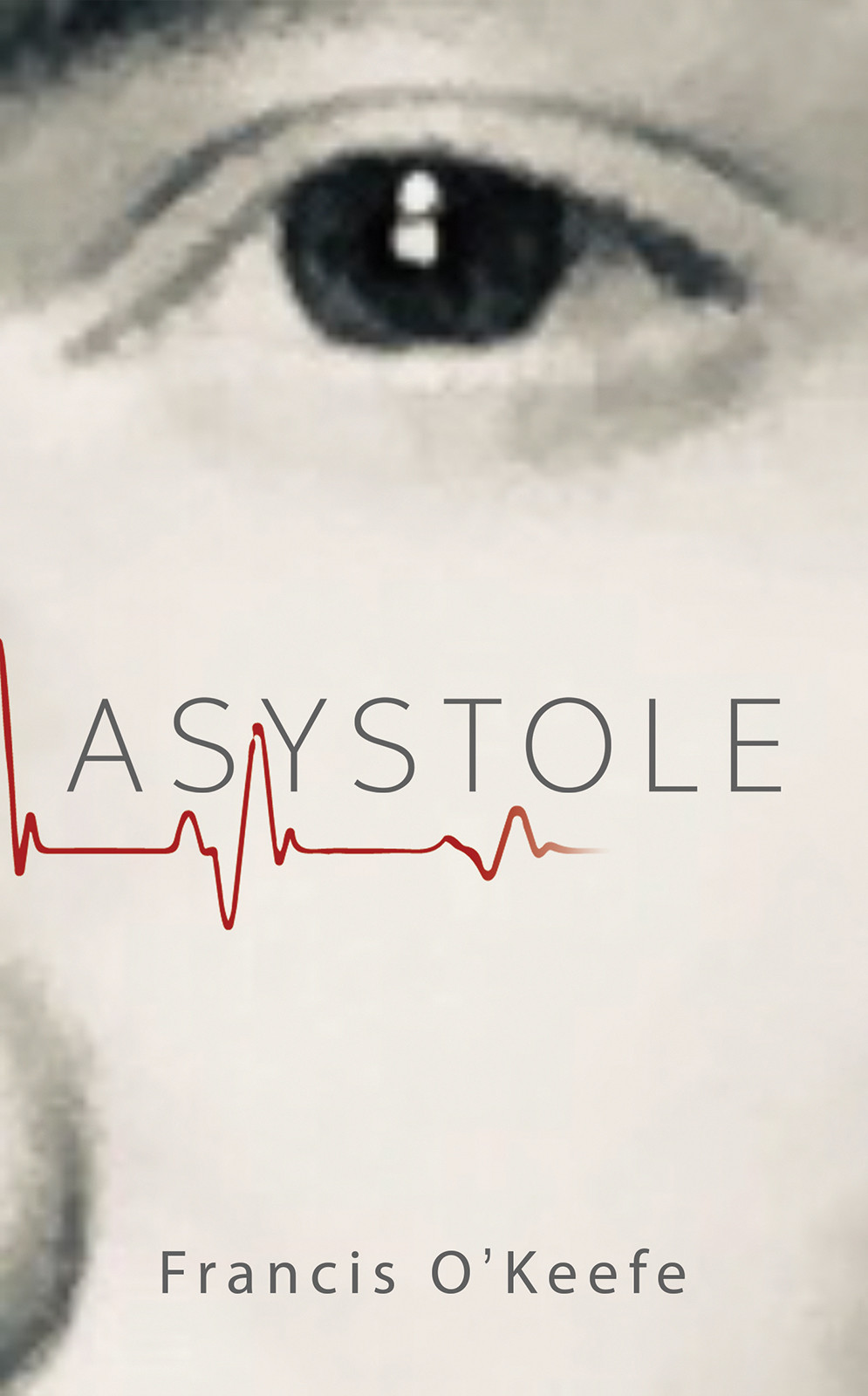
Asystole-bookcover

By: Francis O'Keefe

Asystole

Pages: 188 Ratings: 5.0

Book Format: Choose an option

Free standard delivery on UK orders over £35

*Available directly from our distributors, click the Available On tab below

Book Description

‘Justice may be the only comfort the living can offer the deceased.’

If you lack a past, how can you begin to understand your future identity and actions?

Doctor G. Kilbride has the fortune to witness a medical tragedy that blossoms into a scientific miracle, answering some of mankind’s most intriguing questions. This discovery will challenge public perceptions of life, death and beyond, and, for Kilbride, everything. With this knowledge, he is forced to reappraise his own life, mental blocks and dire errors.

In a perilous search for his lost self, he must learn to embrace some distressing truths that he no longer has the luxury to hide from.


Francis O’Keefe has been an independent writer, illustrator and designer for the past five years. Prior to that, he worked as a graphic designer, librarian and cardiac care nurse.


His chosen writing genre involves dark and gothic settings and uses science, medicine and psychology to create well-researched books with believable characters.


He enjoys learning languages, playing piano, reading, and walking with his dog in his spare time.

Available On These Platforms

Customer Reviews
5.0
20 reviews
20 reviews
  • Garrett Hamilton

    What stands out most in Asystole is its atmosphere. There’s something cold and echoing about the world Kilbride moves through, almost like the hospital is mirroring his internal emptiness. The scenes with Nurse Collier are some of my favorites, she represents empathy and professionalism, and her clear disdain for Kilbride makes their interactions crackle. The CT-scan sequence is haunting, and the aftermath (especially the departments’ reactions) pulls you deeper into the ethical questions the book keeps raising. Very well written.

  • Jason Duprey

    I really enjoyed the ethical layers in this novel. The big discovery, proof that the brain retrieves memories around the moment of death, is handled in a way that feels both scientifically grounded and emotionally unsettling. Kilbride is the type of protagonist who keeps you off balance: brilliant, arrogant, detached, and yet clearly shaped by something painful he can’t remember. The writing is confident, the hospital politics add tension, and the pacing never drags. A great blend of science, philosophy, and character study.

  • Frank Schwartz

    One of the strengths of Asystole is how well O’Keefe writes internal conflict. Kilbride’s cold precision is contrasted with moments of vulnerability especially around his forgotten past. The DMT discussion, the trauma block, and his fear of what he might discover all add dimension to a character who could have been one-note. His marriage is another highlight: Imogen’s mixture of devotion and grief creates emotional stakes that run parallel to the scientific ones. A thought-provoking, atmospheric read.

  • David Pearson

    Francis O’Keefe captures hospital life with almost painful accuracy, the alarms, the rushed footsteps, the stressed staff. Into that realism she inserts Graeme Kilbride, a neurologist who works like a machine and feels like a void. What hooked me was how deeply the novel explores the ethics of discovery. When Powell’s post-death EEG shows memory recall, Kilbride views it as an opportunity while everyone else sees tragedy. That tension ripples through the rest of the story, especially when his ambition pushes him toward dangerous ideas. It feels like a psychological thriller wrapped inside a medical drama.

  • Maria Rodriguez

    This book surprised me with how character-driven it is. Yes, it’s rooted in neurology, but the real tension comes from Kilbride himself, his dryness, his emotional numbness, and the trauma he can’t access. His scenes with Imogen are beautifully uncomfortable. She’s loving, grounded, and full of quiet dread about his research, especially when he admits he wants to explore consciousness at death. Their conversations about faith versus science gave the novel a depth I didn’t expect. Great pacing, excellent dialogue, and a protagonist who feels both brilliant and broken.

  • Anita Constantine

    Asystole begins with a brilliantly unsettling tone. Dr. Graeme Kilbride is one of the coldest, most fascinating narrators I’ve read in a medical novel. The moment Frederick Powell dies mid-CT scan and the EEG reveals memory-recall activity is completely gripping. What I loved most is how O’Keefe balances medical detail with moral discomfort, the nurses are horrified, the staff is shaken, and Kilbride is thrilled. The contrast makes the whole scene unforgettable. The writing is sharp, clinical, and psychological all at once. A bold and intriguing start.

  • Jessica Black

    Brilliant but jaded Doctor Graeme Kilbride struggles to balance the demands of a high-pressure job with a stable but stultifying façade of domestic bliss, until a chance encounter with a patient leads to a discovery that will shake the foundations of modern medicine and challenge humanity’s understanding of our last moments, pulling back the veil to reveal the deepest mysteries about our transition into death. Teaming up with the captivating yet troubled Rita, Kilbride must wrestle with the implications this revelation and delve deep into his past to uncover secrets long buried for the sake of his own sanity. Are some memories best left forgotten, and must we be touched by death to be truly reborn? Darkly introspective and profoundly existential, Asystole is a genre-defying novel with compelling characters, a distinctive voice and otherworldly tone. Despite grappling with heavy themes and intricate, real-world science with corresponding terminological detail, the novel has a light, deft touch, Kilbride’s world-weary commentary adding a welcome element of satire and levity to balance moments of lurking dread and a pervading sense of unease. Part character study, part psychological thriller, part speculative fiction, and thoroughly gripping in all respects, Asystole is full of twists and turns that will keep you guessing until the final page, delivered in clear, stylish prose. Filmmaker Jim Jarmusch famously stated, "Authenticity is invaluable; originality is non-existent," but Asystole delivers flawlessly on the former, while proving that a high dose of the latter is still possible after all.

  • Micheal Munoz

    I enjoyed how this book blended real science with storytelling. The medical parts felt authentic without being too complicated. I could follow the scans, drugs, and seizures, but I never felt lost. What kept me reading was the emotion. Families crying, doctors arguing, and nurses fighting for dignity, it all felt alive. The book didn’t feel like a textbook; it felt like real life. That’s what made it special for me.

Write a Review
Your post will be reviewed and published soon. Multiple reviews on one book from the same IP address will be deleted.

We use cookies on this site to enhance your user experience and for marketing purposes.
By clicking any link on this page you are giving your consent for us to set cookies