Book Description
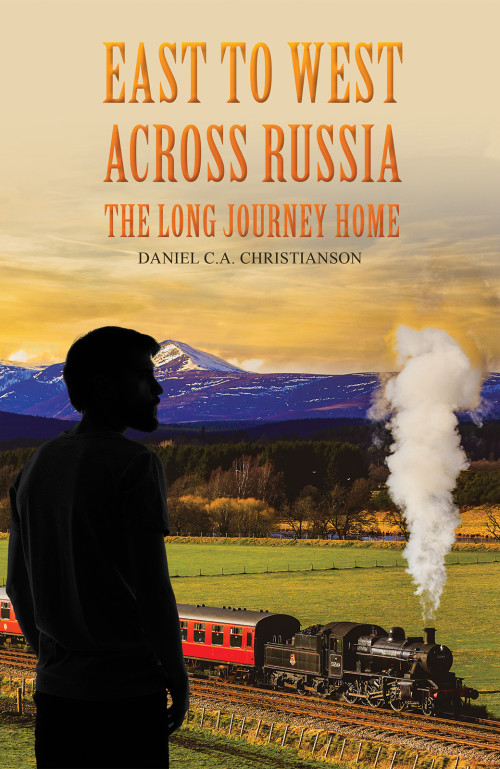
Embark on a captivating journey across the vast Russian steppe aboard the iconic Trans-Siberian Railway in this modern tale of self-discovery and introspection. The narrator, known only as D, begins his westward voyage in Vladivostok, traversing the ever-changing landscapes that unfold before him. As time moves inexorably onward, the everyday lives of the passengers intertwine with the rhythmic churning of the train’s propellers, contrasting sharply with the raw silence of the natural world beyond the windows.As the journey progresses, D’s physical expedition takes an unexpected turn, delving into the depths of his own psyche. A haunting presence, N, permeates the narrative, her essence imbued in the natural world, particularly at the breathtaking Lake Baikal in Siberia. N represents the one who got away, leaving a void and a profound fragility within D’s soul, scattering her ghostly influence across the many places his footsteps tread.Immersed in the tranquil vistas of the external world, D finds himself enamoured by the everyday characters he encounters along the way. As he navigates the complexities of his inner turmoil and the beauty of his surroundings, the narrator embarks on a transformative odyssey. The D who began his journey in Vladivostok will inevitably be different from the one who arrives in Moscow at journey’s end, but what will this transformation entail? Join D on this introspective voyage as he unravels the mysteries of his past, present, and future on the Trans-Siberian Railway.
He is a man of solitude. His world is that of the quiet and distilled. Each night, he sits at his desk as the clock strikes midnight. He journeys inward to that bottomless pit of conflict, prompted by memory, in search of an image fused with the imagination in order to reveal truth through character and the creative narrative process. The words become sentences and they are formed. And so it all begins. This was his first attempt and successful completion of a full-length book. His name is Daniel C.A. Christianson.
Available On These Platforms
Customer
Reviews
117 reviews
-
The author, narrator and protagonist remind me of somebody but I am not sure who this person or persons is. There is a deep shadow that hangs over the novel as if it was deliberately cast by the author himself. I read it once straight through as I usually do with most books I read and then I read it a second time but this time I reflected and pondered on the many passages that were placed in front of me. Such passages often hold up a mirror to my own life and the many insecurities that exist within me. The protagonist is a deeply introspective individual. He seeks a different and alternative life and one that is away from the everyday monotony and absurdities of our world. I also question whether this character of N is real or whether she is an imaginary figure like a ghost always there but also very elusive. The protagonist writes about her as not only the love of his life but somebody heavenly that he tried to love and hold onto but in the end she faded away from his life and all that meaning and love he has for her is gone forever. I found it very sad but never depressing and I felt hope resonating from the pen of the author.
-
‘East to West Across Russia’ is more than just a travelogue —it’s a deeply personal journey . While it took me some time to read, the book has stayed with me ever since. As I read, I felt as though I were not only seeing Russia’s vast landscapes but also being guided through hidden corners of my own mind. The author’s attention to detail brings each setting to life vividly.
The author’s interactions with people along the journey are insightful and add layers of depth to the story. There’s a sense that he has a unique wisdom, a knowledge that comes from first-hand experience and a life rich with introspection. The way he writes makes me think about aspects of life I’d never considered before, about ideas that often stay hidden beneath the surface.
One of the most poignant parts of the book is the presence of N, a figure who hovers like a distant memory , someone he longs for but cannot hold. She symbolises mystery, and love that is forever lost. The sadness of this loss permeates the story, as though each landscape reminds him of her.
Another thing that makes the book impressive is the author’s thoughts on literature, history, and politics. His thoughts are thought-provoking and natural.
The book also provides a wealth of knowledge. Coming from India, I didn’t know much about Russia before reading this, but now I can say that I know a lot.
Also it is not just a book that takes you across Russia—it’s a book that takes you deep within yourself. It’s a journey that has stayed with me.
I highly recommend this book, as it will stay with you long after you are done reading it.
-
The person who wrote this book has a particularly keen interest in literature and specifically Russia literature while at the same time he has a suspicion for politics and that of nationalism. Politics and literature are pitted against one another in the middle of the book and in siberia. Literature is used in a way to critique the political structures and one can see what the author truly thinks about nationalism. It was obvious to me that the character of N is not a real person but an idealised strong and feminine woman that the author dreams about but who remains out of his grasp in this world of brokenness. The natural world becomes his great love in this life as he can trust and respect it but it is human beings that he cannot truest.
-
This book was not what I thought it would be. I was expecting a travelogue about the places that the narrator experienced while crossing Russia on the train. I like such narratives and I am used to specific train travelogues but this book is really not about travel at all. It is a journey about the soul of man and the memory that underpins the vast expanse of doubt, pain and ultimately loss. This book could be set anywhere and could even be set in the home of the narrator without ever physically moving as the action truly resides within the mind and heart of the protagonist. Perhaps the author did not set out on this course of action but was both prompted and inspired by his own unconscious thought and so what we are left with are the inner musings of the protagonist and the past that he once knew.
-
This book really struck a cord with me. It is deeply introspective and essentially forces the reader to turn inward in order to reveal unresolved issues that have become dormant over the passage of time. It is not necessarily a good thing because it could cause a reader to deal with past issues in the present that could further their anxiety and melancholy. I can see how it is a deeply personal book to the author but it can and does become deeply personal for the reader too. The reader is following the journey of the protagonist but becomes embroiled in their own past as well. I think the author of this tale is Scandinavian and more specifically Norwegian and Swedish as it becomes clear how sacred the natural setting is for him and this is most evident at lake baikal in Siberia. Perhaps the author drew on his past experiences from the rugged and natural settings within both Norway and Sweden.
-
I have just finished this very interesting book. It was given to me by my friend who also read it very quickly. It did take me a while to fully grasp what the author was talking about through his narrator but especially through his protagonist. There are a couple of quite controversial scenes in the middle of the book but I do believe they were written more as allowing a debate to form rather than judgement. I really liked the final scene. It is written with so much feeling and love and it immediately reminded me of The Great Gatsby and the love that Gatsby holds for Daisy is very much mirrored in this book and especially in the final scene as the protagonist accepts the death of his love. I echo previous reviews in recommending this book. It is very different from most travel books that I have read before.
-
This was quite an unusual book as I was never fully sure if it was a fictional or non fictional scene that I was reading but I really liked how flowing the narrative was and each location and scene moved quickly onward to the next allowing the reader to follow on such a journey. The long monologue scene in the middle at lake baikal could have been set anywhere as it was more of a philosophical pondering and debate rather than literary scenes. However, I enjoyed this monologue as it allowed me to question my own philosophical beliefs and what side of any debate that I choose to be part of. One can never get away from the love scenes as it is very obvious that the protagonist is pining for his lost love as is trying to find her within the exquisite and raw beauty of siberia. The ending is so beautiful but also so very sad but it does leave the reader with many questions as to the character of N and whether she is a real person or fictional character. I recommend this book to anybody who wishes to be brought on a journey but not exactly the journey that you might be expecting. You will most definitely have many questions to ask of the author following reading this lovely book.
-
Two of my favourite things in the world are travelling and trains and both are crucial to the overall narrative of this compelling book. The love interest of the protagonist was not any interest or importance for me. I was more interested to read about life on the train and the connection between the narrative and the historical significance of the geographical location as shown and told by the author through his protagonist. I have never embarked on any journey through Russia but if I was to visit the largest country in the world I would surely take the train along the transsiberian railway. There are deep philosophical questions that the protagonist ponders upon. They are set against the backdrop of lake baikal which is described by the narrator as something not from this world. After reading about lake baikal I now wish to see it with my own eyes.
Write a Review












 Discover