Book Description
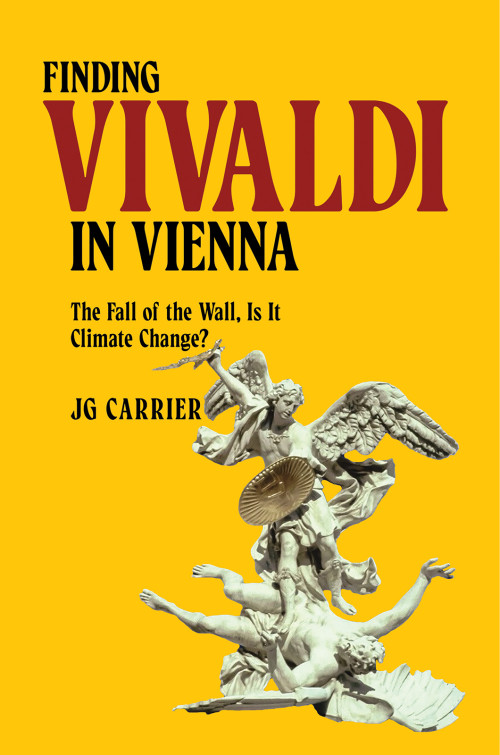
This is the adventurous pursuit of the lost compositions of Antonio Vivaldi and his final burial place in Vienna, led by Tibor, an imprisoned Czech Marxist turned dissident signatory of the protest Charter 77. During his 10 years of solitary confinement, Tibor becomes obsessed with Vivaldi’s music. With the Fall of the Wall and his release in 1989, Tibor and his historian friend, Dr. Lenka Svoboda, decode clever clues and messages that guide them through the dark corners of Vienna and Prague. Their journey leads to the surprise discovery of lost Vivaldi concertos and the location of Vivaldi himself.This story also explores the love between Vivaldi and the soprano Annie Girò, who conspired to secure a proper tomb for her lover when he died in Vienna in 1741, rather than have him consigned to a common grave. Indications left by Annie in a manuscript of Vivaldi’s music lead Tibor and Lenka to the end of their quest. The culmination of their journey is celebrated by Vienna and the world with the rediscovery of Vivaldi’s music and his mortal remains.
JG Carrier is the author of nine books ranging from literary works to studies of public policy. Mr Carrier was born in Canada and has lived and worked in many regions of the world during his international career. He was a journalist and business leader in Canada, an official and diplomat with international organisations in Vienna and Geneva, and the Secretary General of the International Chamber of Commerce (ICC) in Paris. He currently writes and resides in Switzerland. He remains a proud Canadian.
Available On These Platforms
Customer
Reviews
2 reviews
-
Viewed through the prism of twenty first century ideological drift, Carrier has crafted a quest tale. Our protagonist and, dare I say, hero, is Dr. Tibor Novak living in his new found post Falling of the Iron Curtain (FOTIC) existence in a small research institute located in Laxomberg, a suburb of Vienna. His quest involves finding the last Communist in Eastern Europe, searching for Antonio Vivaldi (an Italian composer of the 18th century who spent his last years living in Vienna with his soprano lover), finding the long lost loved ones of his two best friends and his own atonement for disastrous decisions of the past. The author blends all these quests into a wonderful tale with a happy ending.
The story is character driven and we meet Tibor himself, a scholar and diplomat and his two besties, a mathematician and a historian turned vintner. We also spend some time with Vivaldi’s love interest who has created the elements of the mystery of Vivaldi’s burial place. The strangest character in the piece is Tibor’s former jailer in the pre-FOTIC era who has now become his acquaintance (friend is too strong a designation but it’s close) in the post-FOTIC time. The modern characters, along with Tibor himself, all struggle with their beliefs pre-FOTIC and post-FOTIC, formerly “C” communists now, in large part, “c” communists with a more socialist bent.
As we embark on this quest with Tibor, we would be well served to learn little about 19th century dialectical thinking beginning with Hegel but mostly fleshed out in Marx. Terms like “dialectical materialism” or “the dictatorship of the proletariat” can be a little opaque to the uninitiated. But the author has done his research well. From his base in Switzerland, he has managed to describe the state of the European ideological world in the post Gorbachov period. We also get some intriguing lessons in geography and the end of the Hapsburg empire.
While it took me around 20 pages to engage with the characters and the story, if you stick with it you will be rewarded. New characters are introduced along the way and our affection for them all evolves. So I would recommend this book. It is not a light read but worth the energy required to think and learn.
-
Vivaldi in Vienna is a seriously clever, insightful, and mysterious read. It is a sensitive exploration of what the fall of the iron curtain felt like to a former jailed Czech dissident, his ex-jailer, a Russian mathematician, a Czech, vineyard owner and many more fabulous characters who people thisfast-paced, insightful, mysterious, and funny-sad setof intertwined stories. Gripping right to the end.
Write a Review







 Discover