Martin Hayden | Suffolk Poetry Society
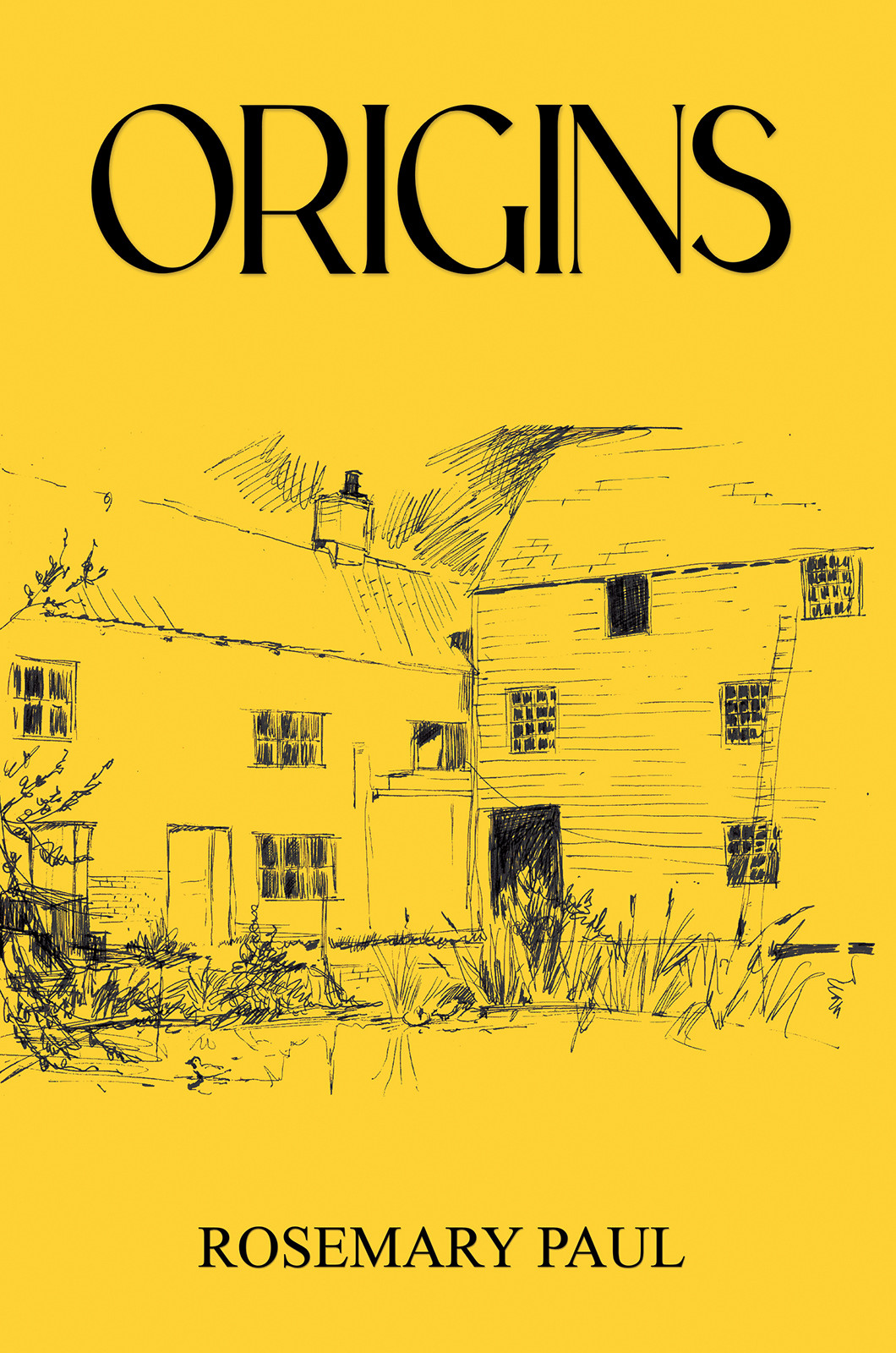
Origins is a 'good read', as they say. The poems are unpretentious, often 'everyday' in a very attractive way: about a table that's come through the family and now rests in the 'garage-cum-shed' covered with clutter; about hearing the cheerful sounds of a family lunch in a cottage, while passing, blackberrying; about selecting a rug at a market. There are plenty of memories, and Rosemary Paul has lived a long life and come to poetry late, but there are also plenty of present-time, in-the-moment little celebrations, too. Formally many are loosely shaped (sometimes the punctuation needed more editing, perhaps, as it can be random and sporadic), but 'Homeward Bound' is an accomplished rhyming poem with a beautiful metrically-based movement. And one can indeed see why, as the Introduction tells us, someone unknown to the author found and chose 'Fens, New Year's Day, 2016' as a reading for a funeral. It ends:
Winter's a time for staying home, and grieving
The losses that attend advancing years,
For memories of treasured times and friendships,
For secret thoughts and very private tears.
The section headings give you a sense of the character of the whole: 'Origins'; 'Holidays'; 'Suffolk'; 'Kings Forest'; 'People'; 'Ontario, Canada'; and 'Lighter Poems'. In 'Holidays' we find:
Dad opened a gate
without dismounting.
This was the only time
I rode with my father.
He'd learned to ride
in the army in World War I,
put on a horse at the Curragh
and left to get on with it.
These little hints are effective and touching: elsewhere we learn that 'Dad' took the boys for walks on the hills, but not the author!
You might think the manner is just too notational, not much more to it than simple facts one after the other. Nevertheless, something is achieved: as in 'Old Friends and Pugs', where the speaker's lack of enthusiasm for dogs (...let along dogs with short legs, squashed up faces and corkscrew tails...) means she does not entirely look forward to a trip to old friends in Australia (one of whom breed pugs). Browsing in a picture deal's before departure.
...I found the perfect gift,
a print of a pug dated 1798,
exactly two hundred years old,
a handsome dog, with legs of respectable length,
well-proportioned muzzle and normal looking tail.
Rolled up ('carefully') it 'travels across the world', and the poem ends with it framed and hung in her host's hall before she leaves.
There are some more ambitious poems, such as 'The Hamlin Fistula Hospital', which, from the 'People' section, celebrates Catherine Hamlin, presented as a venerated woman who gave her life to rest'; 'People'; 'Ontario, Canada'; and 'Lighter Poems'. In 'Holidays' we find:
Dad opened a gate
without dismounting.
This was the only time
I rode with my father.
He'd learned to ride
in the army in World War I,
put on a horse at the Curragh
and left to get on with it.
These little hints are effective and touching: elsewhere we learn that 'Dad' took the boys for walks on the hills, but not the author!
You might think the manner is just too notational, not much more to it than simple facts one after the other. Nevertheless, something is achieved: as in 'Old Friends and Pugs', where the speaker's lack of enthusiasm for dogs (...let alone dogs with short legs, squashed up faces and corkscrew tails...) means she does not entirely look forward to a trip to old friends in Australia (one of whom breeds pugs). Browsing in a picture dealer’s before departure,
...I found the perfect gift,
a print of a pug dated 1798,
exactly two hundred years old,
a handsome dog, with legs of respectable length,
well-proportioned muzzle and normal looking tail.
Rolled up ('carefully') it 'travels across the world', and the poem ends with it framed and hung in her host's hall before she leaves.
There are some more ambitious poems, such as 'The Hamlin Fistula Hospital', which, from the 'People' section, celebrates Catherine Hamlin, presented as a venerated woman who gave her life to the work of treating obstetric fistula in Ethiopia, establishing a hospital and training school and eventually much more. Does the poet get away with appropriating the voice of the local women? She certainly makes a poem out of such a subject, with four-line stanzas (metrical, if unsteadily so!) and a refrain:
Catherine, Emaye, beloved Mother,
how we miss you, how we bless you.
You were friendship, understanding,
held our hands and gave us hope.








 Discover