
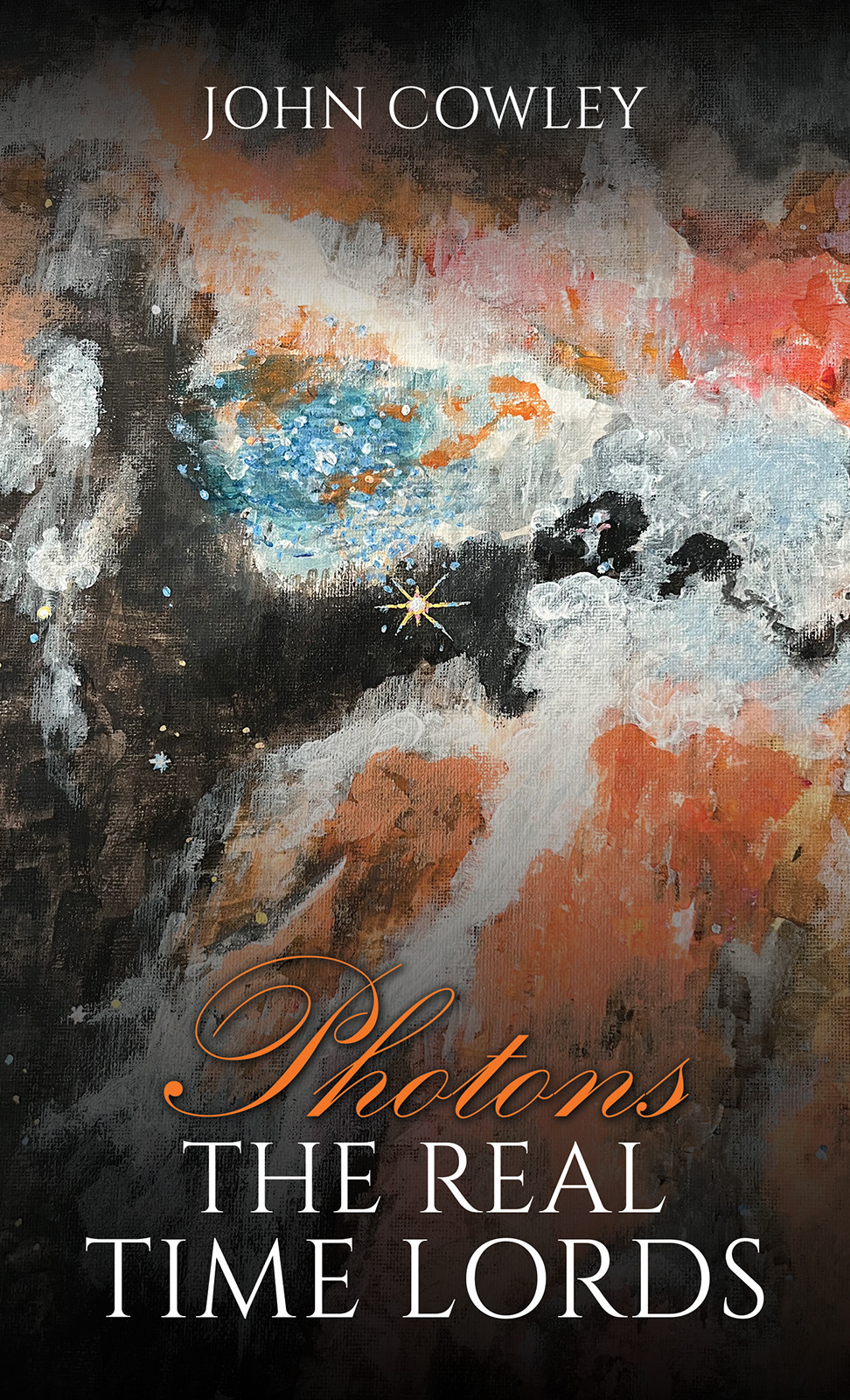
Book Description
About one hundred years ago, new discoveries involving the nature of fundamental particles challenged some of the laws of classical physics and our understanding of reality. Niels Bohr and Albert Einstein became involved in an argument about the nature of reality, epitomised by Einstein’s claim that "God does not play dice with the universe," expressing his scepticism about the probabilistic nature of quantum mechanics and the concept of inherent randomness in the universe. Today the argument has long been settled in Bohr’s favour, and quantum theory is firmly established as the most successful theory in the history of science.At the very core of quantum theory is the wave-particle duality of matter, wherein fundamental particles like electrons and photons can be observed to behave both like particles and also like waves depending on the circumstances. Today there is increasing speculation that all particles and even larger compound objects may also have a quantum wave function.Photons stand at the edge of this new reality because, unlike electrons, they have no rest mass, and yet they are attracted by the force of gravity. Black holes swallow up anything that comes too close, including photons, leading to the idea that nothing can escape their influence, not even light. However, there is evidence that black holes also radiate energy, producing a form of electromagnetic radiation, photons that energise the continual expansion of our universe.Adding to their mystique, photons also appear to manipulate time, as evidenced in the classic "double slit" experiment, during which photons appear to show retrograde action, reversing in time to go backwards and change the images formed on a screen. All this and more has led the author to see photons as “the real Time Lords”.







 Discover