Book Description
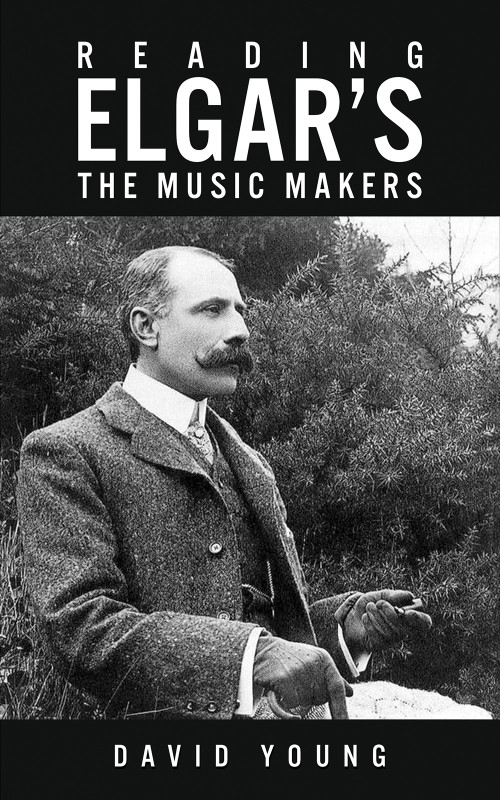
Elgar’s The Music Makers, for contralto solo, choir and large orchestra, has experienced a chequered reputation since its 1912 premiere at the Birmingham Festival. The work faced significant adverse criticism which re-emerged over time. Criticism targeted the poem Elgar chose for his setting – Arthur O’Shaughnessy’s ode, whose reputation was later tarnished by T.S. Eliot’s infamous critique ‘What is Minor Poetry?’. Misunderstanding of Elgar’s innovatory compositional procedure was another main reason behind the negative responses. Elgar integrated the poetic language with musical self-borrowings, transforming the words and offering perceptive listeners enhanced emotion at the highest artistic level. All aspects of Elgar’s musical language combine to produce one of his greatest, yet least understood, masterworks.Reading Elgar’s The Music Makers brings to the fore a prime example of how first musical performances can be misunderstood and reception can shift over time. The work remains as relevant today as ever. The book’s multi-faceted approach will be invaluable not only for conductors, singers and music students, but for concert goers and music lovers generally.
David Young taught music history and theory at the Royal Northern College of Music, worked for the Associated Board of the Royal Schools of Music as a consultant in South East Asia, and was Professor of Performance Studies at Kampala University and Vice-Chancellor of the East Africa University, Rwanda.
He is editor of Haydn the Innovator: A New Approach to the String Quartets (2000) and author of Beethoven SymphoniesRevisited: Performance, Expression and Impact (2021) and his scholarly writings have appeared in the RMA Research Chronicle, Current Musicology, New Grove Dictionary of Music and Musicians, and the International Haydn Symposium.
Available On These Platforms
Customer
Reviews
1 reviews
-
David Young's fondness and warmth of passion for Elgar's undeniably under-rated work for mezzo-soprano or contralto soloist, chorus and orchestra are evident on every page of this fascinating, erudite study of The Music Makers Op.69.
A professional mezzo-soprano myself, I have sung many times the glorious solo premièred by Muriel Foster back in 1912 at The Birmingham Festival under the baton of the composer. Yes, the text of O’Shaughnessy’s Ode cannot be but of its time, a ‘criticism’ that could surely equally be levelled at some of the five poems Elgar chose to set to music in his only orchestral song cycle, Sea Pictures Op. 37, again for contralto solo, and premièred some twelve years earlier by my distant ancestor, the formidable Dame Clara Butt, (a true contralto if ever there were one!) Indeed, it is from Sea Pictures and the even more critically acclaimed Enigma Variations, both of 1899, that Elgar, in The Music Makers, so freely 'self-borrows' from his First and Second Symphonies, his Violin Concerto and The Dream of Gerontius, a practice considered immensely innovative by most, but criticised by others as being overly autobiographical.
In the final paragraph of his delightful and eminently readable book, David Young concludes: "The time has surely come when we need no longer defend The Music Makers; instead, we may wish to celebrate one of Elgar's most singular achievements." Hear, hear, say I.
Write a Review





 Discover