
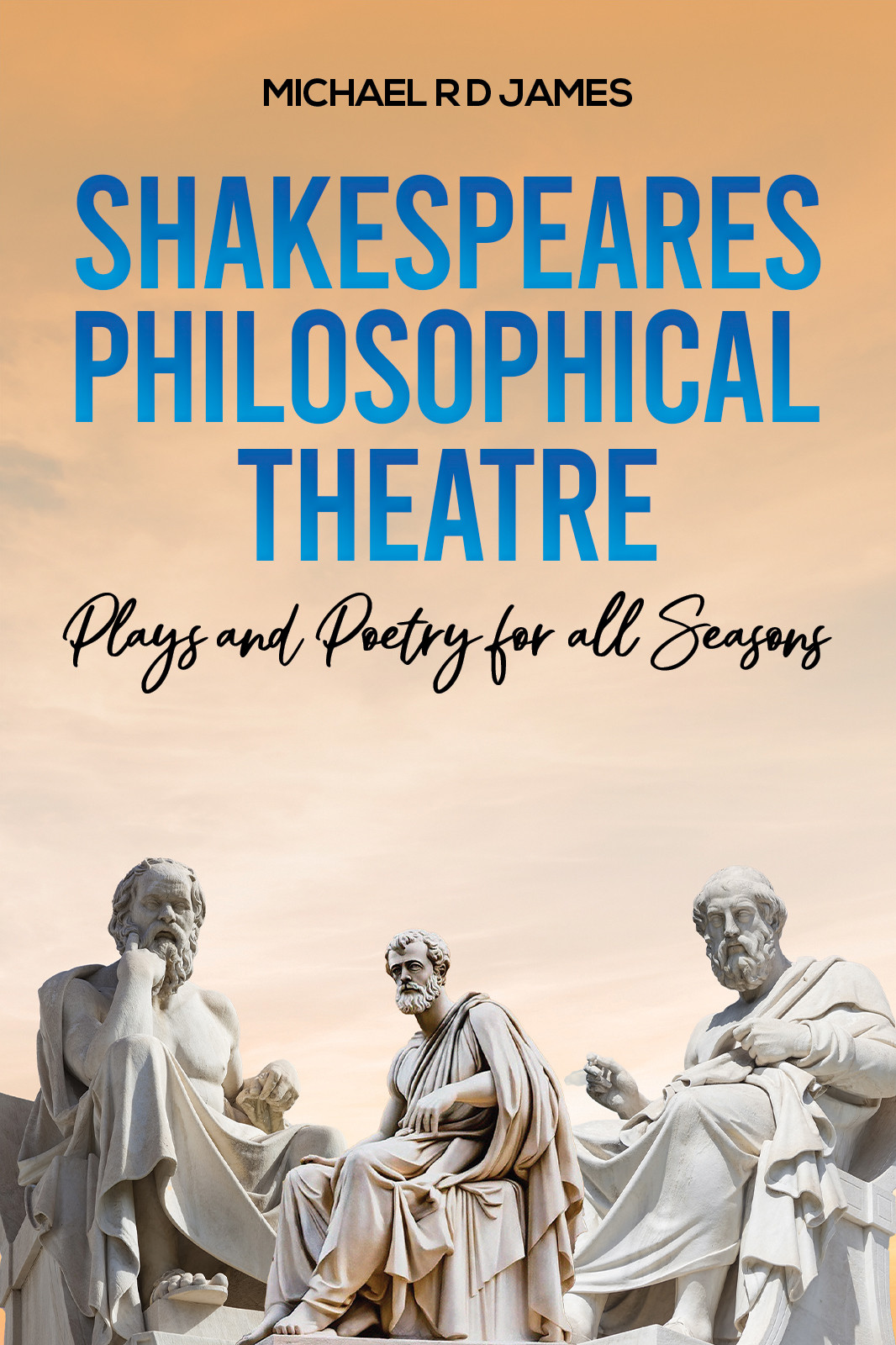
Book Description
Is Shakespeare a philosophical playwright or not? T S Eliot suggests he is not, a point of view which this work disagrees with. The reason he has not been identified as a philosophical artist is because of the modern philosophical view of aesthetics, which is at odds with both Aristotelian and Kantian views. Freudian and Kleinian psychoanalytical concepts are used to analyse the “enveloping” qualities of his productions as well as the aesthetic result. Shakespeare has an awareness of what happens in life when the balance of the mind of an agent is disturbed by mental illness and he demonstrates the grasp of this problem in several of his most famous plays. He also has a deep understanding of the psychology of the tyrant and the large-scale consequences which follow from this.
Kant argues that beauty and the sublime are “symbols of morality”: a judgement that requires an analysis of both symbolism and the metaphysics of morality if it is to be fully understood. Shakespeare’s work is described as “cosmopolitan”, and this attractive characteristic is linked to what is described as the “hidden plan” for civilisation: a plan aiming at the Aristotelian hylomorphic essence-specifying-definition of man as a “rational animal capable of discourse”. The commentaries of Wilson Knight and Harold Bloom are also philosophically evaluated from a philosophical point of view.









 Discover