
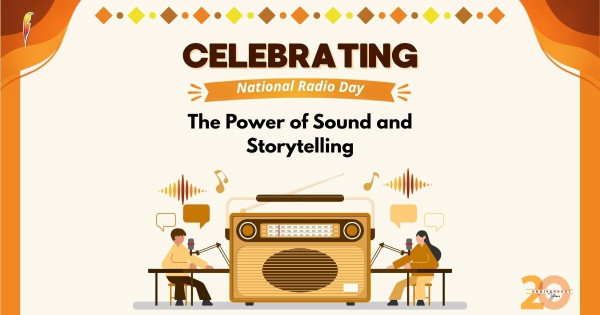
There is an essence about the radio that cannot be matched by anything else. The listener does not have to stare at a screen nor read from pages. Listening alone brings alive voices, stories, jokes, and music through which images can form in one's head.
The reason why there are so many memorable things about radio is because, before podcasting and streaming was commonplace, the radio provided everyone with stories, music, conversations and company from places far outside the rooms they were in.
When celebrating National Radio Day, it will be interesting for all of us to take a minute and think of everything that this incredible medium has provided for us over the years. From radio broadcasting in the golden days to audio books and podcasting in modern times, how we listen to things may have changed, but the love for good voices and stories never has.
How Radio Changed Storytelling
History of radio is a history of the way people have come together using sounds. Through radio, spoken storytelling has been brought into people’s living rooms, new music has been made known to the public, news has been communicated, and unique sounds have been created.
Many times, certain radio programs remind one of specific moments in life. You may find yourself reminiscing about your time when you would listen to the radio during long car rides, mornings when you would hear music when preparing for work, or favourite presenters who always made the day sound more interesting.
David Hamilton's Long and Winding Road
There may be few books in this collection that could give such insight into British broadcasting as ‘David Hamilton's Long and Winding Road’.
David Hamilton's broadcasting career spans several decades starting with his journey from a lonely Sussex farm all the way to the radio and TV studios of both the UK and the United States. Interestingly, he eventually came back to that very same farm to do his national radio broadcasts at the age of eighty-five.
There have been some amazing highlights in his broadcasting career. While on National Service in the RAF in Germany, he was among the first DJs who played rock and roll music. Four years later, he interviewed a new group, The Beatles.
Later in life, Hamilton would star in thousands of radio shows and television programs covering everything from Top of the Pops to sports and beauty pageants. There are many more stories of how he met some of Britain’s most famous comedians such as Ken Dodd, Benny Hill, and Tommy Cooper.
However, the memoirs are not only about Hamilton’s time at work. The author tells us about other experiences in life - about love, accidents, football, failures and successes of his life.
All those interested in the radio history, broadcasting and people who made it possible should find it very interesting to read.
Now Who's Talking? 1:
What if animals could speak about their thoughts?
The book ‘Now Who’s Talking? 1’, uses such an engaging concept to create a story that allows animals - squirrels, butterflies, hedgehog babies, tiger cubs, and others - to speak on behalf of themselves.
The story is witty, amusing, and often unexpectedly insightful.
Though this is not a radio book, it is an idea that seems to fit the audio world just fine. Assigning personalities to the different characters is exactly what spoken stories need to be compelling.
Another point that should be made in connection with this book is that it demonstrates well the fact that the voice needs to convey more than just the story through language. The personality behind the language becomes extremely important.
That is why radio stories are so successful - they convey personality.
Now Who's Talking? 2: More Animal Voices, More Fun
If you find yourself asking what else the animals have to say in this first book, now here is ‘Now Who's Talking? 2’ where the fun continues.
In this second instalment, Des Lynam and Bryony Hill guide us through farms and zoos to introduce us to such animals as ferrets, turkeys, flamingos, and even crocodiles! Again, the animals are made to speak with tongues that match their behaviour and make some funny comments on the animal-human relationship.
The drawings add yet another dimension to the whole process, providing a visual component to the dialogue.
We use cookies on this site to enhance your user experience and for marketing purposes.
By clicking any link on this page you are giving your consent for us to set cookies



 Discover