
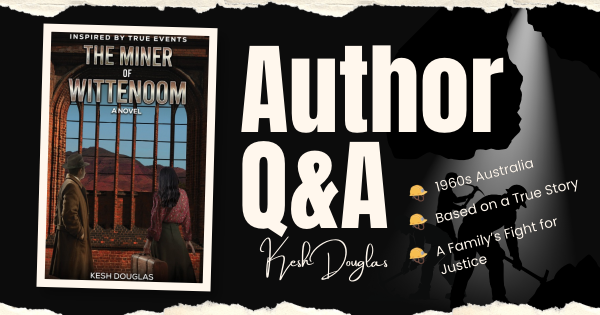
Really enjoyed this book. Compelling story and as it’s based on a true story – you get hooked immediately!
⭐⭐⭐⭐⭐
–Anna Thomson
If you’d like to discover more about the true story behind these events, and the lives it has touched, the book is available to read about on our website.
What was Wittenoom like during its mining years, and what drew people from different backgrounds to live and work there?
People came to Wittenoom seeking work and a better life for their families. Abele and Maria arrived from Italy in the 1960s, exchanging everything familiar for red dirt, fierce heat and isolation. Experiencing the outback myself helped me understand that contrast. I wanted to show the relationships, belonging and hope people built there.
What did Abele and Maria Moretti’s experiences reveal to you about the hopes, challenges, and choices of families building a life in a remote mining town?
Their experiences show how much families will risk for a better life, and how a harsh, isolated place can become home through the people around you. That makes the betrayal so painful: companies prioritised profit over health despite medical warnings, and work intended to provide security threatened their future. Their strength lies in facing it together.
What made this story personal for you, and why did you feel you had to tell it?
I lost my birth father to mesothelioma because of his time in Wittenoom. Research showed me how many other families were affected, and I felt compelled to tell their story. What stayed with me was the gulf between their hopes and the harm they faced. I felt this overlooked Australian history needed to leave my research folders and become a story readers would care about. Over ten years, I wanted to turn that loss into something meaningful: greater awareness, questions that deserve answers, and perhaps even a life saved. I also believe government efforts to hide the truth make telling it all the more important.
You travelled to the outback as part of your research. What did experiencing the heat and isolation bring to the story?
To write authentically, I needed to experience Wittenoom and the outback for myself. The heat, red dirt and vast distances helped me imagine Abele and Maria arriving from
Italy, far from everything familiar. I wanted readers to feel that harshness but also understand how hope and community could make it home.
How did public understanding of the health risks associated with blue asbestos develop over the years, and what did you discover about how this affects the people of Wittenoom?
Warnings were raised, yet many workers and families did not understand the danger. That gap made me angry: people deserved to know the risks and protect themselves. The consequences could lie dormant for decades. I lost my birth father to mesothelioma because of his time there, so this history is personal—a reminder of the families behind every warning.
You have spoken about becoming angry during your research. How did you turn that anger into a story that readers could connect with?
I did not want to soften the injustice, but I wanted readers to meet the family before the message—to care about their hopes and the life they were building. That conviction kept me going. I turned anger into a human story that asks how innocent families could pay such a terrible price.
When turning real historical events into a novel, how did you decide which details to preserve, which perspectives to explore and how to bring the story to life for modern readers?
I wanted to honour the history without writing a report, so I told it through a family whose hopes and choices readers could care about. Visiting the outback helped me convey the heat and isolation alongside the life they built. Over ten years, I worked to balance historical truth with a compelling story and a message that lasts beyond the final page.
Which aspects of the real events behind the book do you think are most important for readers to understand, and why?
Abele and Maria were ordinary people willing to leave everything familiar for their family’s future. Their courage makes what followed so heartbreaking. Asbestos exposure affected families as well as miners, because tailings were used around the town. I want readers to see the people behind the disaster—their love and resilience, as well as the injustice.
How is Wittenoom remembered today, and what do you think its history tells us about the lasting relationship between a community, its industry and its environment?
Wittenoom was dismantled, removed from official maps and degazetted; eventually, its last resident left. I understand the need to protect people from asbestos, but closing a town does not close its story. Families—including my birth father—were part of that history. The Miner of Wittenoom is my way of keeping their hopes, struggles and losses alive.
After reading The Miner of Wittenoom, what aspects of the story would you most like readers to reflect on or investigate further?
I hope readers remember the courage of leaving home, starting again and fighting for justice. I spent ten years bringing this overlooked history to life because the families deserve to be remembered. Above all, I want greater awareness of asbestos danger. If the book helps save even one life, I will feel I have achieved what I set out to do.
What other stories or movies come to mind when you think of your story?
Erin Brockovich, Toxic Town and Dark Waters come to mind: stories of people confronting environmental harm and demanding accountability from powerful companies. The circumstances differ, but they share a determination to make ordinary lives matter. I hope The Miner of Wittenoom resonates in the same way—a family seeking a better life in the Australian outback, then fighting when that promise is betrayed.
We use cookies on this site to enhance your user experience and for marketing purposes.
By clicking any link on this page you are giving your consent for us to set cookies
.png "Q&A of G.P. Bundy")
_1793794572.jpg "Mystery, Romance or Fantasy: Which Book Genre Should You Read Next?")
 Discover