Book Description
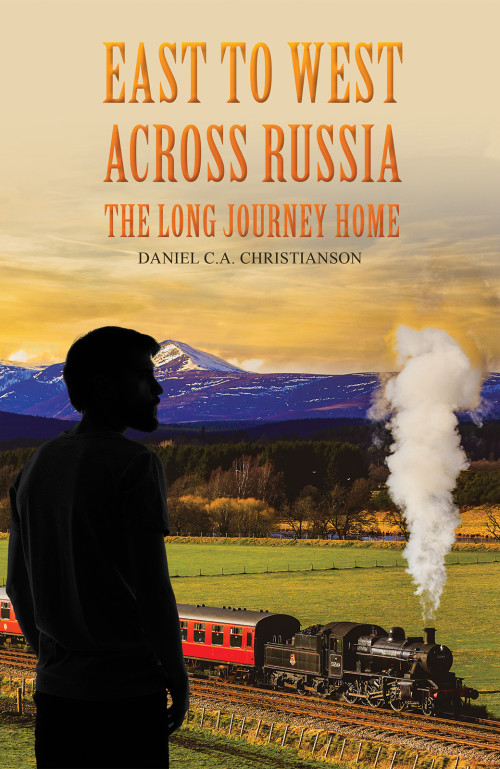
Embark on a captivating journey across the vast Russian steppe aboard the iconic Trans-Siberian Railway in this modern tale of self-discovery and introspection. The narrator, known only as D, begins his westward voyage in Vladivostok, traversing the ever-changing landscapes that unfold before him. As time moves inexorably onward, the everyday lives of the passengers intertwine with the rhythmic churning of the train’s propellers, contrasting sharply with the raw silence of the natural world beyond the windows.As the journey progresses, D’s physical expedition takes an unexpected turn, delving into the depths of his own psyche. A haunting presence, N, permeates the narrative, her essence imbued in the natural world, particularly at the breathtaking Lake Baikal in Siberia. N represents the one who got away, leaving a void and a profound fragility within D’s soul, scattering her ghostly influence across the many places his footsteps tread.Immersed in the tranquil vistas of the external world, D finds himself enamoured by the everyday characters he encounters along the way. As he navigates the complexities of his inner turmoil and the beauty of his surroundings, the narrator embarks on a transformative odyssey. The D who began his journey in Vladivostok will inevitably be different from the one who arrives in Moscow at journey’s end, but what will this transformation entail? Join D on this introspective voyage as he unravels the mysteries of his past, present, and future on the Trans-Siberian Railway.
He is a man of solitude. His world is that of the quiet and distilled. Each night, he sits at his desk as the clock strikes midnight. He journeys inward to that bottomless pit of conflict, prompted by memory, in search of an image fused with the imagination in order to reveal truth through character and the creative narrative process. The words become sentences and they are formed. And so it all begins. This was his first attempt and successful completion of a full-length book. His name is Daniel C.A. Christianson.
Available On These Platforms
Customer
Reviews
117 reviews
-
I was recommended to read this book earlier in the year but it was only in the last few weeks that I finally got round to reading it. I have had a fascination and deep curiosity for Russia and the Soviet Union since I was a child. I only ever got to visit Leningrad as it was then before the collapse of communism. One of my bucket list wishes is to cross Russia by train along the transsiberian railway from Moscow to Vladivostok just like the author of this novel did although he completed that journey in reverse. I loved reading about siberia and how the magnificence of that region opened up as Christianson showed the reader the taiga forest and lake baikal. I don't know if I will ever make it there now and especially with the ongoing war but to experience such wonders with my own eyes just like the character D did will be something that I will truly cherish. I like how the author weaved a story of love or the brokenness of that once love as the whole country opened up to him from his seat on the train. Many reviewers question whether she is a real person or not. I tend to think that she is not a real and living person but more of a eulogised heroine that was thrust into the soul of his protagonist as a reaction to the Old Russia of creativity when confronted with the modern Russia of terror and war.
-
What a lovely book, so nostalgic, so full of longing and hope. I cannot say that I have knowledge or understood some of the topics that you referenced but the way that you told the story was so very beautiful. I have known you since you were a boy but I had no idea that you had such a keen interest in and a passion for writing. You should be so proud of what you have achieved. Your father would be so proud of you and this immense accomplishment. My only question is will there be more books? Congratulations Daniel!
-
I have only completed reading this book recently. I started reading it last December but stopped after a few chapters as I found the material to be quite deep and not exactly what I had been looking for. I also came across this book by complete accident. I was in Zurich Switzerland last November and went to visit the grave of one of my favourite authors, James Joyce. On his grave I saw a copy of this book East to West across Russia: The Long Journey Home by Daniel C.A. Christianson. I opened up the book and saw that the author had written an inscription and gifted his book to whomever would come across it. I didn't take the book with me but a few weeks past and I had become intrigued by that book so I decided to purchase my own copy to read. It was only in the last few months that I have returned to reading this book and I am so happy that I have as it truly comes alive in the centre of the novel at lake baikal. The protagonist falls in love with the natural world of siberia because he cannot get over the love he once had for N. I feel N is a real life person and was the love of D's life. Christianson writes this book as a way to remember and honour his great love. Perhaps I am wrong but what a movie this story would make.
-
I came across this delightful but rather confusing book in Norway last summer. I was informed that the author is Scandinavian but that he is a very mysterious individual as I have seen no image of him, no media presence, no interviews about East to West. It is as though Christianson does not exist but what does exist is the words to his novel. They are at times rather melancholic but they are deeply riveting. They flow with a passion that I have not come across in fiction before. At the core of this book is the love story of D and N or rather the pining for N by D. We never see or hear from N. She is a ghost like figure who only makes an appearance in the last scene of the book. At times I think she must be a real person and was the inspiration for the author in creating such beautiful words but at other times I feel that she is not real because if she was a real person then surely the author would have given her a full voice and narrative throughout the novel. I came to the conclusion that she is yet another fictional heroine throughout world literature that created a moment, a stirring of emotion in the reader. We all long for an N in our lives but sadly when we return to the real world we see that she has faded away too.
-
This book was recommended to me last year. I was told that the author is from Scandinavia but lives in Ireland but I don't know if this is true as I have seen no sight of Christianson in Ireland since my arrival here. He seems a most elusive author. It has been stated that this was his first book but his author biography is very vague and refers more to the process and art of writing than it does to the author himself. One thing that I can say for sure is that this is a very well thought out and written book. The author has clearly a deep love for Russia that at times borders on the obsessive but it is very authentic. I do wonder what Christianson would have to say about the current war in Ukraine with Russia as the perpetrator? I agree with other reviewers who said that the character N is not a real life person. I feel that N is symbolic of the unrequited love that he has with the old and classic Russia, what he refers to as Old Rus. N begins to break down under the deep seated contradictions of the Soviet Union and she fades away from the heated cobblestones on Red Square in the modern Russian of aggression, plundering, paranoia and war. D loses his N like Russia has lost its soul.
-
I came across this book by complete accident as I was researching articles on Russia for a class assignment. I read it the first time all the way through and then read it a second time as I was very intrigued with how it is structured. I don't even know whether to call it a novel or a travelogue. It is quite bizarre in many parts and especially how the author stated that it is both a non-fictional and fictional book. Isn't that a direct contradiction? How can they be both? I am not sure what the author was trying to achieve. The only thing that I can be certain about is that the author or at least his protagonist has a great interest, knowledge and love in Russia. This is very evident in the narratives discussing the great Russian writers of Pushkin, Solzhenitsyn, Tolstoy, Dostoevsky, Chekhov and Gogol. The author seems to long for the past when Russia was its mots beautiful and soulful. I cannot figure out if the character of N is a real or make believe character. She is certainly an idealised heroine whom the protagonist once loved and pines for he love again. He seems to be lost and invisible in this world without her but when she was by his side he was alive with energy and creativity. I really liked the ending. It seemed real and the natural ending to a puzzling narrative. I would recommend this book to others but one will be left with more questions than answers at the end of this journey across Russia.
-
On reading this book, one becomes aware of the profundity the author descends when writing about human emotion. East to West Across Russia maps the geographical to the metaphysical guiding the inner journey of the soul along its own road. As the character D traverses the vast expanse that is Russia, he uncovers a sense of humanity through the people he meets that still exists in a physical world which has historically been torn apart by conflict. Having experienced this journey, he has found something which everyone can relate to, anyone who has struggled with the loss of a soul mate. The writing on Lake Baikal, in particular, is captivating; the depth of the lake mirroring the depth of loss. Whether the writing is non-fictional or uses fictional narratives, it combines both to meld what ostensibly seems a travelogue into something beyond that. For a first book, this is one is significant and deserves the attention of anyone with a flavour for good writing.
-
I have just finished reading this beautifully written book over the last week but I wanted to write a review to tell how I came across this book. I didn't find it in a bookstore or online. It wasn't recommended to me by a friend or work colleague. I don't know anybody in Russia nor have I ever travelled to Russia. It was new years day earlier this year and I was in the city of Weimar in Germany's Thuringia region and on a day trip from Leipzig. I had never visited Weimar before but I was drawn to there by its wonderful Christmas markets and a place that is synonymous with high artistic literature. I had walked through the old town of Weimar in the morning along with visiting Goethe's garden house on the Ilm in the early afternoon. I then made my way towards Weimar cemetery to see the final resting place of both Goethe and Schiller in the ducal vault and next to a Russian orthodox church. Small and light snowflakes had begun to fall when I walked past a wooden bench close to the ducal vault. I noticed a colourful but still book on the bench. I thought somebody had been reading it but then forgot it when it began to snow. I sat on the bench and looked at the book. It read East to West across Russia: The Long Journey Home by Daniel C.A. Christianson. I had never heard of this author before. I immediately thought that he must be Scandinavian with a name like Christianson. I liked what I saw on the outside and then opened it to look inside. I was amazed to see a note written by the author. It was addressed to the reader and it said that he was here in Weimar and that he wanted to gift this copy of his book and his words to whomever would fall upon it. I looked around to see if he might be still around but there was nobody there. It was such a beautiful setting as the snow became heavier and thicker. I took the book with me and brought it back on my return train journey to Leipzig. I was determined to read it in full and then to write a review worthy of how I found this book. It certainly did not disappoint. It is a book written by a very sensitive and passionate man who longs with regret after the great love of his life whom he calls N. It is quite mysterious as the reader is never told about the past lives of both D and N and whether they were a real couple or not. What is clear is the deep connection between the soul of the protagonist D and the sublime natural world that he continues to navigate on his long journey home presumably to someplace in Scandinavia such as Denmark, Norway or Sweden. When I was reading such words of love for N I became quite emotional as tears began to flow from my eyes. I understand what it feels like to lose a great love. Maybe it was fate that I was supposed to be at that wooden bench in Weimar on that specific day to pick up this book East to West. I am so happy that I did pick it up because it is so well written and full of honesty and meaning. Whomever reads this review I urge you to read this gem of a book by Christianson. It is different to other books I have read, very different indeed. Thankyou Mr. Christianson, whoever you are. We did not meet in person on that day in Weimar but I did meet your words and I tell you that they are words of such beauty.
Write a Review











 Discover