
Book Description
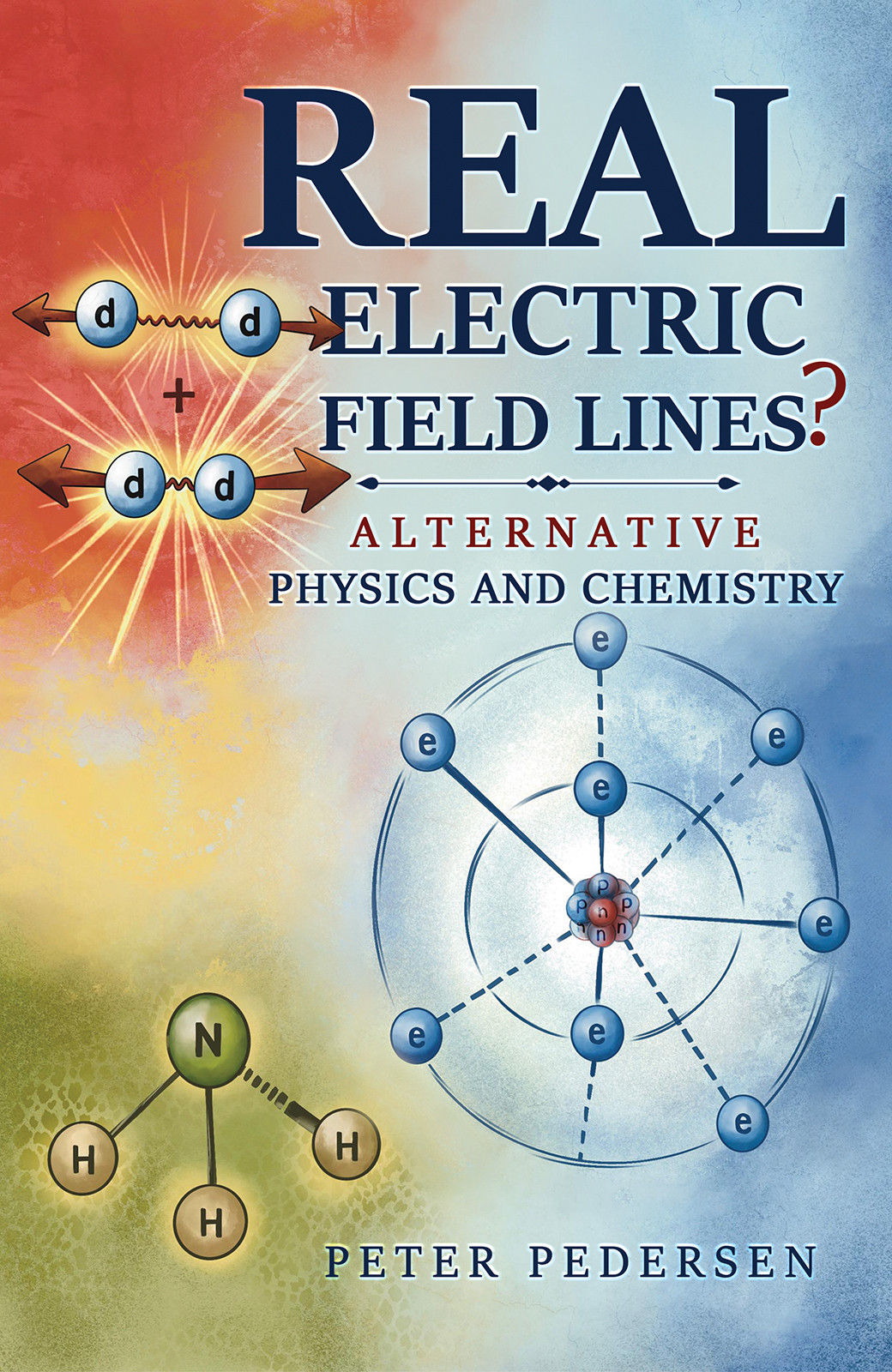
This book presents the hypothesis that, in the microscopic domain, “real” lines form between pairs of charges.
These lines exclude forces from other charges and possess their own mechanical properties.
Although highly unusual and speculative, if accepted, this hypothesis yields dramatic and testable consequences:
- It directly suggests the theoretical possibility of cold fusion—specifically, the fusion of deuterium nuclei at room temperature. This could unlock a potential energy source that is green, cheap, and virtually unlimited (using heavy seawater as fuel).
- The electron energies of arbitrary elements can be calculated in a remarkably simple way, using only a pocket calculator. By contrast, traditional quantum mechanics relies on supercomputers and, even then, yields only approximate results.
- A chemical bond can be viewed as a line in the sense defined in this book, meaning only thermal oscillations along the bond are permitted. As a result, calculating specific heat becomes essentially a matter of counting the bonds in a molecule. Consequently, as shown in the book, the specific heat of almost any chemical compound (at room temperature) can be determined quite simply.










 Discover