



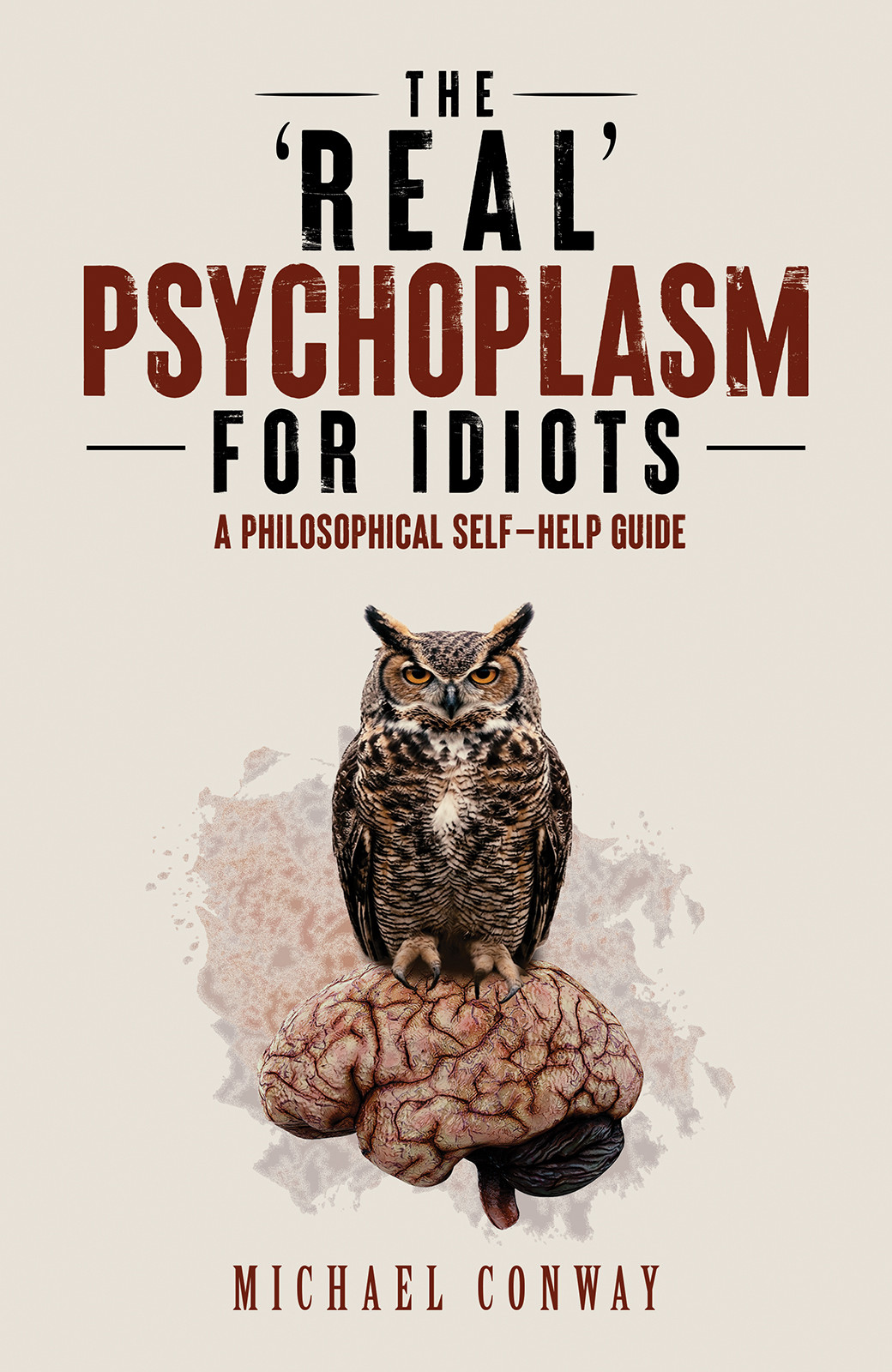
The 'Real' Psychoplasm for Idiots
Philosophy—from the Greek for ‘love of wisdom’—is a personal belief about how to live or deal with a situation. I compiled this book of philosophical quotations mainly to help myself, and by extension, anyone who reads these words after me.
The ‘Real’ Psychoplasm for Idiots brings together over a thousand categorised words of wisdom on topics that range from wisdom, failure and success, fear and courage, knowledge, education and learning, happiness and unhappiness, winning and losing, victory and defeat, work, problems, worries and doubts, sex, life and death, thinking and thought, richness, wealth and poverty, attempting, acting and doing, time (yesterday, today, tomorrow), hope and peace, prayers and wishes, fools and foolishness, fantasy and reality, friends and enemies, silence, shyness and avoidance, confidence and low self-esteem, truth, honesty and justice, all the way through to writing and speaking.
Along with the quotations, you’ll also find inspirational texts and stories from the Quran, the Christian Bible, Hinduism, and Buddhism.
‘It is a good thing for an uneducated man to read books of quotations. The quotations, when engraved upon the memory, give you good thoughts.’
– Winston Churchill
I hope you enjoy these quotes from some of the finest minds ever to walk the earth. I hope they give you good thoughts and that those good thoughts transform your life—just as compiling and writing this book has transformed mine.
Michael Conway
 Discover