
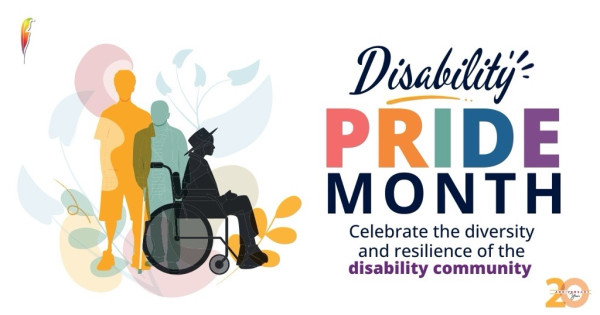
The latest official estimates available in 2026 state that around 16.7 million people in the United Kingdom are disabled. That is one in every four people. This figure comes from the Family Resources Survey for 2024 to 2025...which was published by the Department for Work and Pensions on 26 March 2026.
Disability is part of everyday life but disabled people are still often reduced to a diagnosis or judged by what others think they cannot do. Their experiences may also be left out of books, classrooms and public discussions. Disability Pride Month occurs every July. It challenges the attitudes and barriers that prevent disabled people from playing an active role in society. Reading is one way to mark this month.
- A memoir can place the writer in control of their own story.
- A children’s book can help young readers talk about differences without fear or pity.
- A history book can show that disabled people have always been part of society.
This staff-selected list includes ten books for little kids, tweens, teens and adults. The titles cover family life, education, dyslexia, Rett syndrome, cerebral palsy, polio, mental health and disability history.
Each book presents one experience rather than trying to speak for the whole disability community.
What Is Disability Pride Month?
Disability Pride Month began in Boston in 1990, the same year that the Americans with Disabilities Act became law. It later became an international movement.
Scope has supported the growth of Disability Pride Month in United Kingdom since 2009.
Disability pride does not mean pretending that disability is always easy. A person may feel proud of their identity. It also does not mean that every disabled person must use the word “pride”. People have different relationships with disability and no one should be pressured to share personal information or take part in public celebrations.
Here are the key points:
How Literature Helps Improve Disability Representation
Disabled people are not represented the right way. They have often been shown as helpless or unusually heroic. These narrow roles can shape the way readers think about disability in real life.
Books can help by:
No single title can explain every disability.
Readers should look for different conditions, backgrounds, ages and points of view.
A lot of People could also learn from some of the best books written by disabled authors without knowing the writer's background. An author’s identity should not be guessed from the subject of their book.
Check an official biography or the author’s own words before describing them as disabled.
A Quick Guide to the Featured Books
The reader groups below are based on each book’s subject and presentation. They are not official age ratings.
|
Reader group |
Suggested titles |
|
Little kids and families |
Just See Me, My Doodle Is a Little Different, My Dad’s New Legs |
|
Older children and tweens |
Am I Different?, Four Fairies Tell Tales, The Girl and the Mirror |
|
Teens and young adults |
Beyond the Chair, A Brief History of Disability, Hazel Climbs Mountains |
|
Adult readers |
Beyond the Chair, Hazel Climbs Mountains, They Said I Would Never Work |
10 Books to Read During this Month
Many lists of inspirational books about disability and resilience focus only on people overcoming personal difficulties. This selection takes a wider view.
It includes stories about family, education, identity, access, history and self-worth.
1. Beyond the Chair by Paul Doyle
Synopsis: In Beyond the Chair, Paul Doyle shares how he got a PhD while living with a severe physical disability. He tells how he worked with young disabled people and adapted his research when standard interviews and note-taking methods were not accessible.
2. Just See Me by Sarah Gannon
Synopsis: A young girl wants people to notice her strengths and personality instead of focusing only on her disability or equipment. The story asks readers to see the person rather than make assumptions based on appearance.
3. Am I Different? by Karlie Mills
Synopsis: Jack finds parts of school difficult because he has dyslexia. As he begins to understand why he learns differently, he learns that dyslexia does not stop him from having goals or achieving them.
4. Four Fairies Tell Tales by Samson Yung-Abu
Synopsis: In Four Fairies Tell Tales...there are three familiar fairy tales whose main characters are disabled. These characters have used courage and support to solve problems and face the challenges in front of them.
5. My Doodle Is a Little Different by Roselee Guinness
Synopsis: This story is inspired by a young girl with Rett syndrome...It asks readers to see her joy and personality before her condition. It also gives families a simple starting point for learning about Rett syndrome.
6. My Dad’s New Legs by Nora Mansor-Clark
Synopsis: Six-year-old Arianna’s life changes after her father has an accident and loses a leg. The family faces worry and frustration before finding new routines and ways to enjoy their time together.
7. A Brief History of Disability by Molly Seymour
Synopsis: This book looks at the place of disabled people throughout human history. It questions the old idea that disability makes someone imperfect and presents disabled people as an important part of human diversity.
8. Hazel Climbs Mountains by Christopher Vanier
Synopsis: Hazel’s story is the seven decades of her life with cerebral palsy. It covers all her education, employment, love, parenting and her efforts to access opportunities that were once denied to many disabled people.
9. They Said I Would Never Work by Daphne M Brown
Synopsis: After contracting polio as a child, Daphne was told that she would never be able to work. She later became a headteacher, counsellor and charity founder, refusing to let other people’s low expectations decide her future.
10. The Girl and the Mirror by Thomasina Farrell
Synopsis: An illustrated story about a girl who struggles with what she sees in the mirror and how she feels about herself. It shows young readers that speaking to someone and accepting support can help during difficult times.
Children’s Books About Disability and Inclusion
Children often notice physical and communication differences...Some clear answers can help them with their curiosity and stop any unkind assumptions.
Several titles in this list can help adults start those conversations:
After reading, parents and teachers could ask:
These questions help children think about the person rather than treating disability as the only important part.
How to Celebrate Disability Pride Month in United Kingdom
Here are some ideas that will help you celebrate this month rather than judging.
Read a wider range of books
Choose children’s stories, memoirs, fiction and history.
Look for books in which disabled people have goals, flaws, relationships and interests beyond their disability.
Hold an accessible book discussion
Choose one of the featured titles for a school, library or workplace reading group.
Before the session:
Support disabled writers and artists
Buy their books, attend their events and recommend their work.
Avoid expecting disabled people to provide unpaid advice simply because the subject concerns disability.
Improve digital access
Check whether your website and social media posts can be used by more people.
Useful steps include:
Ask before sharing someone’s story
A person’s diagnosis, photograph or personal experience should not be shared without clear permission.
Consent should be given freely and should cover where the content will appear.
Keep the work going after July
This Month should not end with one reading list or social media post.
Continue reviewing access, recommending disabled writers and including disabled people in your decisions.
Language When Discussing Disability
Language preferences can differ. Some people prefer “disabled person”, while others prefer “person with a disability”. Use the words chosen by the individual whenever possible.
|
Avoid |
Better option |
|
Wheelchair-bound |
Wheelchair user |
|
Confined to a wheelchair |
Uses a wheelchair |
|
Suffers from a disability |
Has a disability or lives with a condition |
|
Normal people |
Non-disabled people |
|
The disabled |
Disabled people |
|
Despite their disability |
Be specific about the achievement |
Avoid praising a disabled person simply for working or living independently.
Focus on the person’s actual work, choices or achievements.
Celebrating Disability Pride Month Through Reading
Disability Pride Month is a chance to give disabled stories more space, but those stories should be read throughout the year. The ten books in this list cover school, research, family relationships, work, history and mental health. They do not offer one fixed picture of disability.
Each title presents a different person, condition or stage of life.
Choose a book that suits your reader, discuss the questions it raises and notice who is telling the story. Then consider what practical changes could make your school, workplace, website or community more accessible for disabled people.
We use cookies on this site to enhance your user experience and for marketing purposes.
By clicking any link on this page you are giving your consent for us to set cookies
.jpg "National Zoo Awareness Day: Discover Stories That Bring the Animal World to Life")
_1786550394.jpg "10 Memoirs to Read on We Love Memoirs Day")
 Discover